Which Companies Provide AI Cybersecurity Solutions to Prevent AI Threats?
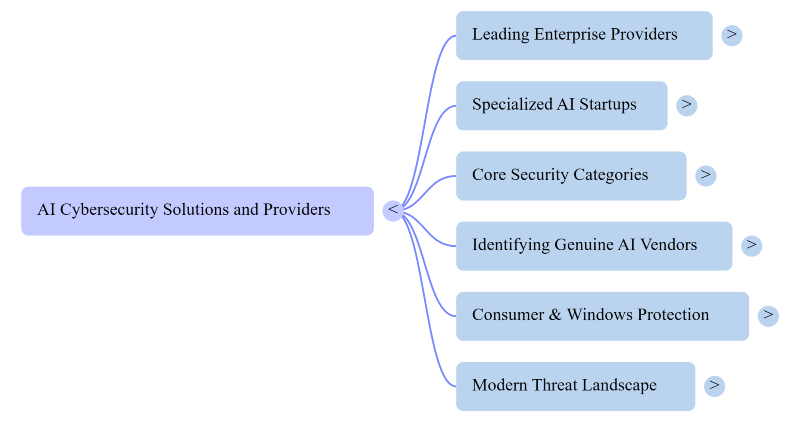
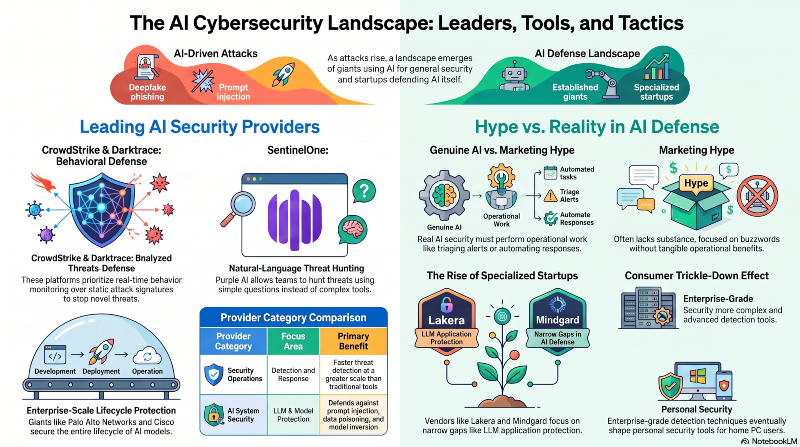
Companies provide AI cybersecurity solutions to prevent AI threats through a mix of established security giants and specialized startups, with leading providers including CrowdStrike, Palo Alto Networks, Darktrace, SentinelOne, and Cisco, each applying machine learning to detect threats faster and at greater scale than traditional tools allow. These companies fall into two broad categories: those using AI to power detection and response, and those built specifically to secure the AI systems organizations are now deploying.
As AI-driven attacks like deepfake phishing, automated malware, and prompt injection become more common, understanding who the major players are helps both businesses and everyday users make sense of the security landscape, shaping the tools they rely on.
Key Takeaways
- Leading AI cybersecurity providers include CrowdStrike, Darktrace, SentinelOne, Palo Alto Networks, and Cisco, alongside specialized startups like Mindgard and Lakera
- These companies fall into two categories: using AI to power security operations, and securing the AI systems organizations deploy
- Genuine AI security companies have AI performing real operational work, not just marketing language layered over older tools
- Enterprise-grade AI threat detection techniques increasingly influence consumer-level protection tools used on home PCs
- Combining strong personal security habits with reliable maintenance and protection software helps Windows users apply the same principles enterprises rely on
CrowdStrike: AI-Native Endpoint and Cloud Protection
CrowdStrike is an AI-powered cybersecurity platform covering endpoint, cloud, identity, and security operations from a single agent and data model, with Falcon AIDR extending coverage to securing enterprise AI systems.
Its AI capabilities span model pipelines, agent behavior monitoring, prompt injection defense, and shadow AI discovery, making it one of the most comprehensive options for organizations managing both traditional infrastructure and newer AI deployments.
Darktrace: Self-Learning Threat Detection
Darktrace built its reputation on self-learning AI that protects organizations from cyber threats in real time through its Enterprise Immune System, which uses machine learning to monitor every user, device, and workload across a network.
Rather than relying on known attack signatures, the system learns what normal behavior looks like for a specific organization and flags unusual activity that could signal an attack, a method particularly effective against novel, AI-generated threats that don’t match historical patterns.
SentinelOne: Natural-Language Threat Hunting
SentinelOne’s Purple AI technology acts as an autonomous security analyst that users can interact with using natural language, allowing threat hunting through simple questions instead of complex security tools.
This approach reflects a broader industry shift toward making AI-driven security more accessible to teams who may not have deep technical expertise, without sacrificing detection depth.
Palo Alto Networks and Cisco: Enterprise-Scale AI Defense
Palo Alto Networks offers extensive AI security solutions covering models, apps, and agents across the AI lifecycle, enabling organizations to safely adopt AI, though its breadth can come with a steeper learning curve for teams unfamiliar with its ecosystem.
Cisco takes a similar enterprise-wide approach, combining network-level visibility with AI-specific protections designed to catch threats like prompt injection and data leakage before they spread across an organization’s systems.
Specialized AI Security Startups
Beyond the major platforms, a wave of focused startups has emerged to address narrower but increasingly critical gaps. Companies like Prompt Security and Lakera specialize in LLM application protection, while others, such as Mindgard, focus on detecting and remediating AI-specific threats, including prompt injections, model inversion, data poisoning, and adversarial attacks.
These vendors often integrate directly into development pipelines, catching vulnerabilities before AI systems ever reach production.
How to Tell a Genuine AI Security Company From Marketing Hype
With so many vendors now using “AI” in their branding, it’s worth knowing what separates real capability from repackaged features. A genuine AI cybersecurity company uses AI, machine learning, or agentic automation as a core mechanism of its security product, where the AI does actual operational work such as detecting threats, triaging alerts, governing access, or automating response.
Buyers evaluating any provider should look past marketing claims and ask specifically what the AI does, what decisions it makes autonomously, and what still requires human approval.
What This Means for Everyday Windows Users
Most of the companies above build for enterprises, but the technology trickles down. AI threat detection methods pioneered for corporate networks eventually shape the consumer security tools installed on home PCs, and the attack techniques these companies defend against, from AI-generated phishing to malware that adapts in real time, are increasingly aimed at individuals, too.
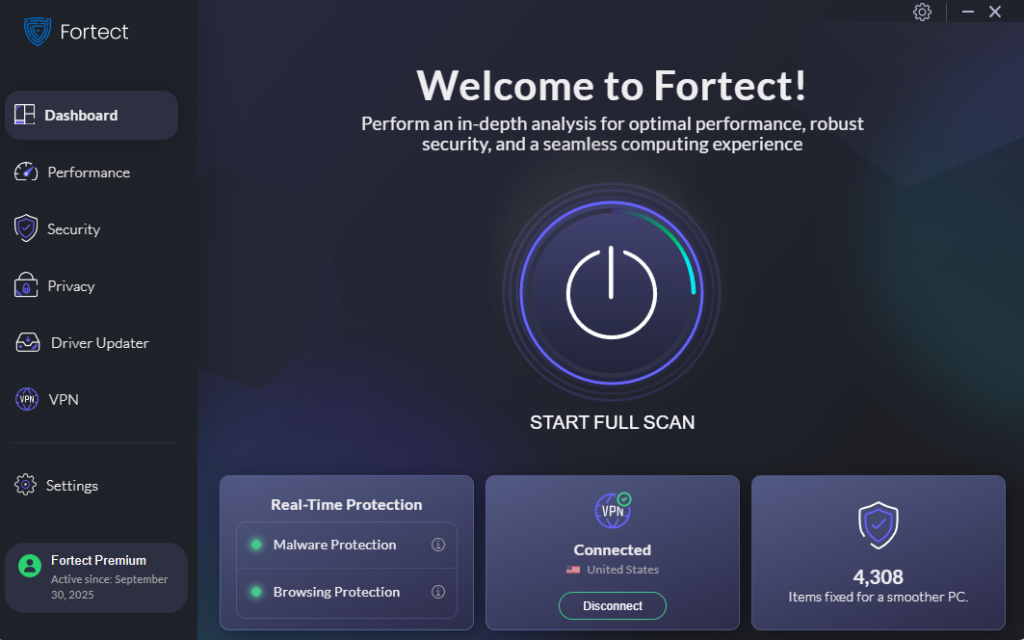
For Windows users wanting that same layered protection on a personal level, Fortect offers real-time protection that can detect threats associated with AI cybersecurity solutions and the attacks they’re designed to stop, removing malicious files and restoring system files that have already been damaged. It also takes care of everyday performance maintenance, clearing out junk files and shutting down crashed or unresponsive programs to keep a PC running smoothly.
The new Fortect Premium now includes a built-in VPN with Auto-Protect on public Wi-Fi, keeping a connection secure the moment a device joins an open network. It encrypts internet traffic to keep data private and shields users from hackers who exploit unsecured connections, a common entry point for zero-day attacks and other network-based threats.
For Windows users who want enterprise-style protection without enterprise complexity, giving Fortect a try is a sensible next step.
The Bottom Line
The companies leading AI cybersecurity, from CrowdStrike and Darktrace to specialized startups like Mindgard and Lakera, are racing to keep pace with attackers who are using the same AI advances for harmful purposes. Whether protecting a global enterprise or a personal Windows laptop, the underlying principle is the same: real-time, behavior-based detection now matters more than static, signature-based defenses ever did.